

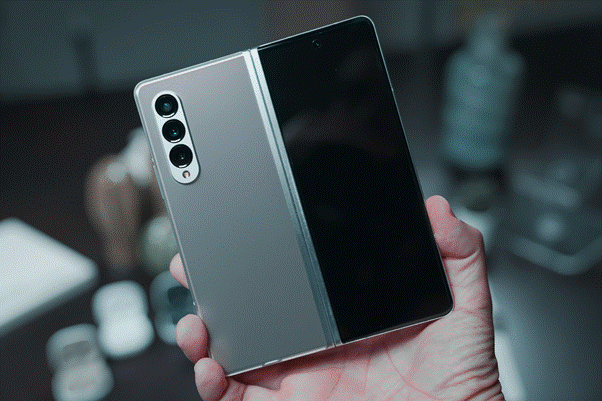
Fold-out handsets started life as trade-show novelties, yet steady engineering wins now place bendable displays within realistic upgrade plans. Prices edge downward, hinges survive hundreds of thousands of openings, and software makers finally treat the wider canvas as a design starting point rather than an afterthought. In short, the scene grows ripe for a fresh style of play that sits somewhere between pocket gaming and tablet immersion. spinfin already prototypes control layouts that rearrange themselves the instant a device unfolds, hinting at where the market will head next.
Screen real estate has always shaped mechanics. A cramped interface means smaller buttons, fewer on-screen cues, and reduced situational awareness. When a handset blossoms into a mini tablet the moment a hinge clicks, developers can move virtual sticks apart, widen fields of view, and locate menus in comfortable side columns. Heat also disperses across a broader backplate, allowing chipsets to hold boosted clocks longer without roasting palms. Taken together, those gains promise smoother sessions and deeper worlds, all inside kit that still slides into a jeans pocket.
A New Canvas for Touch-First Play
Larger displays create more than mere breathing room. Story scenes gain film-strip ratios, puzzle rooms accept multi-finger tasks, and idle titles leave resource dashboards in permanent view so players rarely open extra panels. Unfolded devices also support gently slanted “laptop” poses, turning one half into a tactile pad while the other half remains the main action zone. Such dual-stance freedom encourages experiments impossible on flat slabs.
Top Technical Gains Foldables Offer
- Extended Aspect Ratios: Wider angles let shooters and racers reveal peripheral threats sooner, tilting competitive balance toward keen awareness rather than pure reflex.
- Adaptive Refresh Zones: Panels shift from 60 Hz in dialogue to 120 Hz mid battle, saving battery without visible stutter.
- Spatial Audio Alignment: Speakers placed on opposite edges create genuine left-right separation, improving footstep tracking.
- Distributed Cooling: Vapor chambers span both halves, smoothing temperature spikes that once throttled performance.
Extended analysis reveals that hardware progress alone will not spark mass adoption. Consumers need clear reasons to pay for a hinge beyond bragging rights, and publishers require confidence that early effort will translate into repeat sales. Evidence already gathers. Streaming platforms detect up to thirty percent longer watch times when viewers flick an unfolding motion and prop a handset on a café table. Accessory brands launch snap-on grips molded specifically for open mode, reinforcing the impression that flexible screens equal serious play rather than fragile luxury.
Telco bundles push momentum further. Unlimited data plans now arrive with cloud-gaming trials, and those packages highlight foldables as the perfect viewport. Retail staff demo titles that shift from portrait leaderboard to landscape arena in one smooth gesture, a trick that sells itself better than any spec sheet.
Market Shifts and Revenue Opportunities
A broader screen also widens commercial lanes. Cosmetic designers gain room for panoramic skins that glide across twice the usual pixel count. Ad agencies lease banner space tucked around HUD corners that only appears when the display stretches out, creating premium inventory without intruding on single-screen users. Tournament organisers test fold-only brackets so spectators watch ultrawide action that feels closer to PC broadcasts, elevating mobile esports status.
Phones that bend invite couch co-op as well. Tilt a device halfway and each player receives a personal touch zone, perfect for quick puzzle races or turn-based tactics during travel. This face-to-face arrangement brings social energy that standard handsets rarely match.
Business Strategies Ready for the Flexible Era
- Dual-View Unlocks: Pay-once DLC allowing simultaneous map and character views, aimed at strategy fans hungry for macro awareness.
- Time-Limited Fold Events: Seasonal quests accessible only in open mode, driving curiosity and daily active use.
- Side-Bar Stores: Merchandise carts living on the extra panel so purchases never interrupt play.
- Sponsored Launch Missions: Hardware makers fund exclusive levels celebrating each new hinge generation, giving studios marketing budgets outside the usual pool.
Hurdles Still Blocking the Path
Repair logistics remain a sticking point. Service centers train staff to reseal waterproof membranes after hinge work, yet public perception still fears an expensive mishap. Game testing also grows complex. QA teams must validate folded portrait, folded landscape, half-open tent, and full-flat states on dozens of chipset variations. Automation rigs that open and close screens by the thousand become standard equipment.
On the software side, operating systems need smarter window management. Alerts that suit a tall rectangle may crowd an open square if not repositioned. Clear developer guidelines now surface, but adherence varies. Stores begin attaching “fold-ready” badges so customers know which titles treat the new format seriously.
A Flexible Future Beckons
Every major leap in mobile design has unlocked fresh play patterns. Capacitive touch birthed swiping puzzlers, motion sensors enabled gyroscope shooters, edge-to-edge fronts encouraged gesture platforms. Adding a hinge follows the same logic: more physical possibility equals more creative possibility. Studios prepared to iterate early will secure valuable shelf space and perhaps write the next chapter in portable entertainment.
For players, the appeal is tangible. A train ride starts with a folded phone and a quick resource check, then continues with a full-screen raid the moment a seat opens. At home, the same pocket device props up at a gentle angle beside a wireless controller, doubling as a mini console. No extra tablet, no hotel TV, just one shapeshifting companion ready for whichever posture suits the moment.
Foldable phones still sit at the opening break of the adoption curve, but evidence already indicates genuine staying power. Once durability myths fade and prices settle, flexible screens will likely stand as the default path for anyone seeking richer worlds without lugging extra hardware. In that scenario mobile gaming receives not just incremental polish but an entirely new frame one that literally bends to fit the imagination.
