


Welcome to BCECE, a platform designed for professionals and students who want to build a better understanding of how different systems and structures work. StructureSpy com provides useful and practical information that makes complex structural engineering concepts easier to understand while also covering digital analysis and related tools. Whether you are a student learning the basics of engineering, an aspiring designer working on your first bridge concept, or a business owner looking to improve your website’s structure, the platform offers insights that connect technical knowledge with real-world applications.
StructureSpy com has become a useful resource for exploring a wide range of topics, from the design and construction of impressive skyscrapers to cybersecurity and data structure analysis. By presenting concepts through clear explanations, visual examples, and practical insights, it helps readers understand advanced subjects without relying on unnecessary technical language. As you explore the platform further, you can discover valuable ideas and approaches that support learning, innovation, and effective problem-solving across different fields.
What Is StructureSpy com and Why Does It Matter Today?
StructureSpy com is more than a simple website; it serves as an informative resource for people interested in understanding the structures and systems that shape both the physical and digital world. The platform brings together detailed information and analytical insights about structures such as bridges and buildings, as well as digital concepts including website architecture and system frameworks. By connecting these areas, StructureSpy com shows how ideas such as stability, organization, performance, and efficiency can be applied across different industries.
Education and practical exploration are central to the platform. Readers can explore case studies and explanations that highlight the engineering challenges involved in projects such as large dams, bridges, and high-rise buildings. Instead of presenting complicated ideas in an overly technical way, the content focuses on making concepts such as materials, forces, structural design, and modern engineering innovations easier for beginners and experienced readers to understand.
StructureSpy com is also relevant to current developments in areas such as sustainable construction and secure digital infrastructure. As the demand for stronger, environmentally responsible buildings grows and organizations face increasing digital security challenges, having access to clear and practical information can help users make better decisions. The platform encourages readers to understand potential problems, explore possible solutions, and approach future projects with greater confidence.
“StructureSpy com turns complex engineering concepts into practical insights, helping readers discover the ideas behind strength, stability, innovation, and efficient design.”
Civil engineering professionals can use the platform as a convenient source of reference when researching projects, while students can use its explanations and visual material to strengthen what they learn in class. Businesses may also find useful information for understanding and improving their digital systems. Overall, StructureSpy com aims to make specialized knowledge easier to access, encouraging readers to learn, analyze problems, and develop smarter solutions for both physical and digital projects.
The Evolution of Structural Analysis: From Blueprints to Digital Insights
Structural analysis has evolved significantly from the era of hand-drawn plans and lengthy manual calculations. In the past, engineers depended on physical models, mathematical formulas, and practical experience to estimate how structures might respond to forces such as strong winds or earthquakes. Although these methods played an important role in early engineering, they were often slow and could leave room for mistakes. Modern platforms such as StructureSpy com use advanced computing, algorithms, and digital simulations to examine structural behavior more efficiently, helping make the design process faster and more accurate.
The development of computer-aided design during the late 20th century was an important milestone in this transformation. Engineers gained access to software capable of modeling structures, analyzing load distribution, and studying how different materials respond under pressure. However, early systems could be expensive and difficult to operate, making them less accessible to smaller firms and individual learners. Browser-based platforms such as StructureSpy com build on these technological advances by focusing on accessibility and straightforward interfaces, giving more users an opportunity to explore structural concepts without requiring highly specialized equipment.
A similar transformation has taken place in the digital world, where data analysis and system architecture have made structural thinking relevant to websites and online platforms. A physical structure needs to distribute forces properly to remain stable, while a digital system needs an organized framework to function efficiently and provide a smooth user experience. StructureSpy com brings these ideas together by examining both physical structures and digital frameworks, demonstrating how principles such as organization, balance, efficiency, and resilience can apply across different environments.
This progress has also changed the way professionals and students approach their work. Architects and engineers can use digital models to test different design possibilities much more quickly than traditional methods allowed. Educators can combine historical examples with modern technology to help students understand how engineering practices have developed over time. At the same time, growing concerns about sustainability and changing environmental conditions have increased the need for structures that are not only strong but also flexible and efficient.
“The transition from traditional drawings to digital simulations represents a continuing search for greater accuracy and efficiency, connecting the foundations of engineering with modern technology.”
This history also highlights the broader value of platforms such as StructureSpy com. By bringing together examples, case studies, analytical concepts, and modern digital tools, the platform can help users understand how engineering has progressed while exploring where it may go next. As technology continues to develop, resources that combine practical knowledge with accessible digital analysis can help professionals, students, and curious learners keep pace with new approaches to structural design and system development.
Key Features of StructureSpy com: Tools That Empower Every User
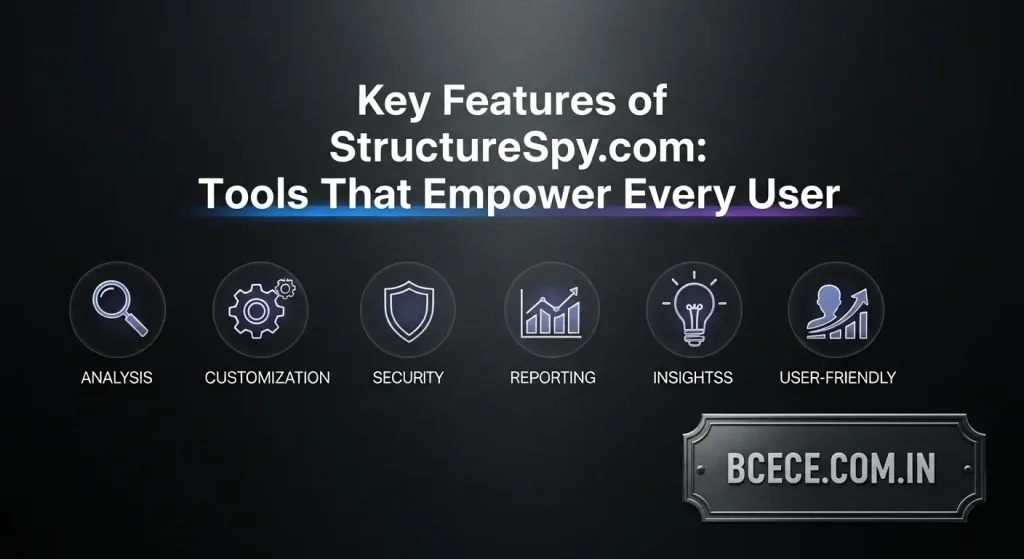
StructureSpy com offers a range of features designed to make complicated analysis easier and more accessible. Its user-friendly dashboard organizes information according to different types of structures, allowing users to quickly find the tools and resources they need. Whether analyzing a bridge, studying a building, or examining a digital framework for SEO, the platform provides a straightforward way to explore relevant information. Visual resources such as 3D models, diagrams, and annotations help transform technical data into content that is easier to understand and follow.
One of the platform’s key features is its interactive simulation system. Users can adjust factors such as wind conditions, traffic loads, or other variables and observe how these changes may affect structural performance. This makes it possible to explore different scenarios digitally without having to test them on physical structures. For digital applications, similar analysis can be used to examine website organization and identify areas that may affect navigation, performance, or search visibility.
The platform also supports collaboration through cloud-based features, allowing teams to share models, add notes, and exchange feedback remotely. This can be particularly useful for professionals working on projects from different locations. For students and beginners, educational resources provide step-by-step explanations of topics ranging from basic structural concepts to digital security practices. Tutorials, interactive examples, and self-assessment activities can make technical subjects easier to learn.
StructureSpy com is also designed with accessibility in mind, allowing users to access information across different devices. This flexibility can be useful when reviewing project details away from a traditional workstation. Report-export features can further simplify the process of incorporating analysis into presentations, project documents, or other records. By combining practical tools with accessible learning resources, the platform can serve both beginners who are experimenting with new ideas and experienced users looking for convenient reference material.
“Interactive analysis and collaborative tools can turn complex technical work into a more engaging process of exploration, learning, and improvement.”
For users interested in more advanced analysis, algorithm-based features can help examine potential durability and long-term performance under changing conditions. Future integrations with design and engineering software could also make digital workflows more connected and efficient. Overall, these capabilities are intended not only to provide information but also to encourage experimentation, creative thinking, and better decision-making through structured, data-informed analysis.
Diving into Physical Structures: Bridges, Buildings, and Beyond
Physical structures are a major part of StructureSpy com, with detailed coverage ranging from everyday bridges and overpasses to impressive engineering achievements such as large suspension bridges. Each profile provides background information about the structure, including the purpose behind its design and the needs it was created to address. This approach helps readers understand both the technical aspects of construction and the human ideas that influenced these projects.
Bridges are explored through different structural systems and engineering techniques. For example, truss bridges are explained in terms of how their connected beams help distribute loads, while visual demonstrations can make it easier to understand how cables, supports, and beams respond to traffic and pedestrian movement. The platform also examines challenges such as earthquakes and strong environmental forces, using real-world examples to explain technologies that can improve stability and reduce structural movement. These discussions show how engineers work to combine appearance, functionality, safety, and durability.
Skyscrapers and other tall buildings receive similar attention, with a focus on important components such as foundations, structural cores, and shear walls. Readers can learn how loads are transferred through different levels of a building and how foundations help maintain stability against wind and other lateral forces. Modern construction materials, including high-strength concrete and other innovative solutions, are also discussed, particularly where they can improve performance while supporting more sustainable construction practices.
“The study of bridges and skyscrapers shows how successful engineering brings together design, functionality, structural strength, and the forces of nature.”
Other major structures, including stadiums and dams, provide additional examples of engineering challenges. Stadium analyses may examine issues such as movement caused by large crowds, while dam studies can explore water pressure, stability, and reservoir management. Diagrams, cross-sections, and stress illustrations can make these concepts easier to understand. Such information can be valuable for students studying structural engineering and can also provide professionals with ideas when considering maintenance or improvements to existing infrastructure.
The platform also covers structures used in outdoor and remote environments, including trail bridges and environmentally focused buildings designed to withstand difficult weather conditions. These examples demonstrate how engineers consider factors such as snow, heavy rainfall, changing temperatures, and other environmental pressures when developing durable structures. The emphasis on sustainable and adaptable construction provides useful insight into building responsibly in challenging locations.
Industrial facilities such as factories complete the broader range of physical structures covered by StructureSpy com. Topics may include vibration management around heavy machinery, fire-resistant construction, and modular building techniques that can help improve efficiency and safety. By examining structures across urban, industrial, rural, and natural environments, the platform provides a broad perspective on how engineering principles can be adapted to different conditions and practical challenges.
Architectural Marvels Through the Lens of StructureSpy com
Architecture on StructureSpy com explores the connection between creative design and structural engineering, showing how artistic ideas can be supported by practical engineering principles. Readers can discover how innovative architects such as Frank Gehry use unconventional shapes and complex forms while relying on carefully designed structural systems beneath the surface. Through illustrations and explanations, the platform helps reveal how hidden frames, supports, and other structural components make visually complex buildings possible.
Sustainability is another important part of modern architectural design. StructureSpy com examines features such as green roofs, energy-efficient materials, natural lighting, and rainwater collection systems that can improve a building’s environmental performance. These approaches can help reduce energy consumption and manage issues such as urban heat. Examples of environmentally conscious buildings demonstrate how sustainable strategies can work alongside structural planning to create efficient and comfortable spaces.
“StructureSpy com highlights the relationship between architectural creativity and structural engineering, showing how ambitious designs depend on carefully planned systems.”
Historical and modern architecture are also compared to demonstrate how fundamental design principles continue to influence contemporary construction. Traditional features such as Gothic flying buttresses can be studied alongside modern glass structures and advanced materials. This comparison helps students understand how concepts such as balance, proportion, stability, and symmetry can be adapted as construction technology develops.
Urban planning adds another dimension to the discussion, particularly through examples of mixed-use developments that combine residential, commercial, and public spaces. These projects require careful coordination between different structural components to maintain strength and efficiency where various sections meet. By presenting projects through timelines and visual explanations, StructureSpy com makes the development process easier to follow, from the initial concept through construction and completion.
Residential architecture is included as well, with attention given to practical approaches for creating safer and more durable homes. Topics such as earthquake-resistant framing, structural reinforcement, and improvements to older buildings demonstrate how engineering principles can be applied at a smaller scale. Overall, StructureSpy com presents architecture as an evolving field where creativity, technology, sustainability, culture, and structural performance continue to influence the way people design and build for the future.
Engineering Insights: From Theory to Hands-On Application
Engineering insights are at the center of StructureSpy com, helping readers turn technical theories and formulas into practical knowledge. Fundamental concepts such as the moment of inertia can be explained through familiar real-world examples, making mathematical ideas easier to understand. By connecting engineering principles with situations people encounter in everyday life, the platform helps learners recognize how structural concepts influence the world around them.
More advanced subjects, including finite element analysis (FEA), are presented through practical, step-by-step explanations. Readers can learn how digital models are divided into smaller elements so engineers can study stresses, movements, and possible deformations within a structure. Clear demonstrations can make these processes less intimidating for students and independent learners, giving them a better foundation for exploring engineering software and analytical techniques.
“Engineering knowledge becomes more valuable when theoretical principles are connected to the practical challenges encountered in real projects.”
Real-world case studies further strengthen these lessons by showing how engineers respond to unexpected conditions. For example, projects involving tunnels and complex soil interactions can demonstrate why site investigations, structural reinforcement, and repeated design adjustments are often necessary. These examples help students understand how classroom concepts are applied in professional settings while giving experienced professionals useful perspectives for approaching similar challenges.
Safety engineering is another important area, with discussions focusing on ways to improve structural reliability and reduce the consequences of potential failures. Concepts such as redundancy, progressive-collapse prevention, and resilient structural systems demonstrate the importance of anticipating risks before they become serious problems. This encourages readers to think beyond basic strength requirements and consider how structures can remain dependable under unusual or unexpected conditions.
Material science completes the broader engineering discussion by comparing the properties and applications of materials such as steel, concrete, and timber. Readers can explore factors including strength, flexibility, durability, environmental impact, and suitability for different conditions. By bringing structural analysis, safety, materials, and practical case studies together, StructureSpy com encourages a broader approach to engineering and helps users develop a more complete understanding of how different disciplines contribute to reliable and sustainable designs.
Digital Structures on StructureSpy com: Where Code Meets Construction Principles
Although physical structures remain a major focus, StructureSpy com also applies structural thinking to the digital world by treating websites, software systems, and networks as interconnected frameworks. Website architecture analysis can help identify issues related to navigation, crawlability, page hierarchy, and broken links. By examining these elements, users can better organize their websites, improve usability, and create a structure that is easier for both visitors and search engines to understand.
The same concept can be applied to cybersecurity, where digital systems need to be designed with resilience and protection in mind. StructureSpy com explores how vulnerabilities within areas such as APIs and connected systems can create weaknesses. Security analysis can help identify potential problem areas and highlight protective measures such as stronger authentication, encryption, and access controls. This approach encourages businesses to think about security as an essential part of digital design rather than something added only after a problem occurs.
“StructureSpy com applies the principles of structural resilience to digital systems, showing how thoughtful organization and protection can help online platforms remain reliable.”
Data structures and database organization are also important parts of the digital side of the platform. Well-planned database schemas can reduce unnecessary complexity and help systems handle increasing amounts of information more efficiently. Visual explanations of concepts such as data organization and normalization can make these technical subjects easier for learners to understand. For developers, this knowledge can support cleaner and more maintainable systems, while businesses can benefit from digital frameworks that are better prepared to scale.
Digital marketing and website organization can benefit from structural analysis as well. Poorly arranged content can make it difficult for visitors to find important information and navigate through a website. By examining content groupings, internal links, and page relationships, users can identify opportunities to create a clearer and more intuitive experience. These improvements can be especially valuable for smaller businesses seeking to establish a stronger online presence.
The connection between structural engineering and digital technology also creates useful opportunities for education. Students can explore concepts such as network topology, system redundancy, and failure recovery through simplified digital simulations and visual examples. Learning how connected systems respond when one component fails can provide a practical introduction to resilience and reliability. This combination of engineering principles and digital analysis prepares learners to understand increasingly interconnected technologies, including smart infrastructure, connected devices, and modern IoT environments.
Real-World Case Studies: Lessons from Iconic Projects on StructureSpy com

Case studies on StructureSpy com help turn engineering theory into practical lessons by examining how real projects overcome complex challenges. The Golden Gate Bridge, for example, provides an opportunity to explore suspension-bridge design, construction history, and long-term maintenance. Its exposure to a demanding marine environment also demonstrates why engineers must consider factors such as corrosion protection, material selection, and ongoing maintenance when planning for durability.
The Burj Khalifa offers another valuable example of advanced structural design. Its buttressed-core system demonstrates how engineers can manage the effects of strong winds while supporting an exceptionally tall structure. The building’s changing geometry and setbacks also help address wind-related forces while contributing to its distinctive appearance. Such examples show how structural performance and architectural design can work together rather than being treated as separate goals.
“Each case study on StructureSpy com demonstrates how engineers adapt established principles to real-world challenges, turning complex constraints into opportunities for innovation.”
The platform also connects physical engineering concepts with digital infrastructure. Examples involving e-commerce websites during periods of heavy traffic can illustrate how systems are expanded and reinforced to handle sudden increases in demand. Technologies such as load balancing and scalable server infrastructure help distribute workloads, much as structural systems distribute physical forces. These comparisons make complex digital concepts easier to understand while showing businesses why reliable infrastructure matters.
Sports venues provide another perspective, particularly stadiums equipped with retractable roofs and other advanced systems. These projects involve careful coordination between structural components, mechanical systems, weather conditions, and changing loads. Studying joint performance and structural tolerances can help demonstrate the importance of detailed planning when designing venues that need to operate safely under different conditions.
Case studies involving flood-prone pedestrian bridges also highlight the importance of adapting engineering solutions to local environments. Modular reinforcement methods and locally appropriate materials can provide practical approaches for communities dealing with flooding and difficult terrain. Hydraulic analysis and erosion protection are important considerations in these projects, demonstrating how engineering decisions can directly affect accessibility, safety, and community resilience.
Industrial renovation projects provide further examples of how existing structures can be improved rather than completely replaced. A warehouse undergoing seismic upgrades, for instance, can demonstrate how engineers evaluate an older structure and determine where additional bracing or reinforcement may be needed. Comparing conditions before and after improvements helps illustrate how targeted upgrades can improve structural performance while extending the useful life of a building. These examples also show how careful planning can help contractors and owners balance upgrade costs with long-term benefits.
Benefits of Using StructureSpy com for Professionals and Students
For professionals, StructureSpy com can simplify research and project workflows by bringing useful resources together in one place. Instead of spending hours searching across multiple sources, users can quickly review relevant case studies and technical information when preparing proposals or planning projects. Collaboration features can also make it easier for teams to exchange feedback, review ideas, and stay organized when working under tight deadlines.
Affordability is another potential advantage. Basic resources can provide useful functionality for learners and smaller users, while expanded features may offer additional capabilities for those with more demanding requirements. This flexible approach can make advanced concepts more approachable for freelancers, independent professionals, and larger organizations alike, reducing the need to rely on expensive and complicated software for every task.
“StructureSpy com helps professionals explore technical concepts and practical analysis through accessible resources designed to support more efficient workflows.”
Students can use the platform as a supplementary learning environment where they can explore concepts, examine different scenarios, and strengthen their understanding through interactive activities. Quizzes and guided lessons can encourage active learning rather than simple reading, while instructors can incorporate selected modules into classroom discussions or group assignments. This can be particularly useful for learners who have limited access to specialized laboratory resources.
Business owners can also benefit from the platform’s focus on digital structures. Website analysis can help identify organizational issues, while security-focused information can encourage businesses to pay closer attention to potential weaknesses in their online systems. Structural improvements to website navigation and content organization may also support a better user experience and stronger search visibility.
Accessibility makes these resources useful beyond experienced professionals. Clear explanations and terminology guides can help newcomers understand technical subjects without becoming overwhelmed by specialized language. Mobile-friendly access can also allow users to review educational material while moving between classrooms, offices, or project locations. Overall, StructureSpy com can support continuous learning and help users develop practical skills that remain valuable as engineering and digital technology continue to evolve.
Subscription Plans and Accessibility: Making StructureSpy com Inclusive
StructureSpy com offers different plans to accommodate users with varying needs and levels of experience. The free “Explorer” option is designed for those who want to become familiar with structural concepts without making a financial commitment. It provides access to essential profiles, introductory simulations, and educational tutorials, making it a practical starting point for students, beginners, and casual users who want to explore the platform.
For users who require more advanced capabilities, the “Pro Builder” plan provides additional tools for professional and project-based work. Features such as enhanced 3D modeling, team collaboration, and expanded export options can be useful for consultants and professionals managing multiple projects or clients. Annual subscription options may also provide better value for users planning to use the platform over a longer period, while expanded reporting capabilities can make it easier to organize and present project findings.
| Plan Name | Key Access | Ideal For | Cost Structure |
|---|---|---|---|
| Explorer | Basic profiles, tutorials | Students, hobbyists | Free |
| Pro Builder | 3D sims, collaboration | Professionals, small teams | Monthly/annual billing |
| Enterprise | Custom integrations, API | Large firms, educators | Quote-based |
Enterprise plans are designed to support larger organizations that need greater flexibility and dedicated assistance. Features such as customizable or white-label dashboards and specialized support can help universities, companies, and other institutions adapt the platform to their specific requirements. This scalable approach makes the service suitable for a wide range of users, from small startups with limited resources to large academic departments managing broader programs.
“StructureSpy com’s plans work like modular frameworks—flexible, adaptable, and capable of supporting users as their needs grow.”
Cloud-based access can also make the platform available to users in different parts of the world, while multilingual resources can help reach a broader audience. Offline access to selected educational materials may be useful for people working in locations with unreliable internet connections. By focusing on accessibility, flexibility, and ease of use, StructureSpy com aims to make technical knowledge more widely available and support learners and professionals across different regions.
Modern Applications: Smart Analysis in Everyday Engineering
In today’s connected world, StructureSpy com demonstrates how structural analysis can be applied to practical situations, including energy-efficient home improvements. Homeowners can explore roof and framing designs that reduce thermal losses while considering the placement of features such as solar panels. By making these concepts easier to understand, digital modeling can help more people explore sustainable renovation ideas and make informed decisions about their properties.
Adventure and remote construction can benefit from similar analysis. Durability simulations for cabins and other off-grid structures can help users consider how timber frames may respond to strong winds and changing weather conditions. Different materials can then be compared based on factors such as weight, strength, durability, and environmental impact. These insights can help outdoor enthusiasts and remote builders approach projects with greater attention to safety and long-term performance.
Industrial applications provide another practical use for predictive analysis. Monitoring vibration and repeated movement in equipment supports can help identify signs of potential fatigue before they develop into major problems. Early identification of structural issues may reduce unexpected downtime and support more consistent operations. Manufacturing facilities can also use systematic monitoring as part of maintenance and safety programs.
“Smart analysis on StructureSpy com turns everyday engineering challenges into opportunities for prediction, planning, and continuous improvement.”
Digital marketing can also be viewed through the idea of structural organization. Campaigns can be mapped as connected journeys, helping marketers identify points where users may lose interest or leave. By reviewing the relationship between content, landing pages, calls to action, and conversion steps, teams can gradually improve the overall flow of a campaign. This iterative process is similar to how engineers refine structural designs through repeated testing and adjustment.
Sustainability-focused projects further demonstrate the broader applications of analytical thinking. Material comparisons can help project planners consider environmental factors when developing spaces such as urban parks and public areas. Infrastructure analysis can also encourage the use of solutions such as permeable surfaces that allow more rainwater to enter the ground and can help manage runoff. Through these applications, StructureSpy com presents analysis as a practical tool for developing more efficient, resilient, and environmentally responsible solutions.
Integrating StructureSpy com with Other Tools: A Seamless Workflow
Integrating StructureSpy com with CAD tools such as AutoCAD can improve the connection between structural analysis and detailed design work. Users can transfer models and analytical results into drafting software, making it easier to visualize potential changes before finalizing technical drawings. This combined workflow can reduce repetitive work, simplify revisions, and help professionals move more efficiently from analysis to design.
For data-focused users, connections with spreadsheet applications such as Excel can make reporting and analysis more convenient. Structural measurements and performance data can be organized in spreadsheets, allowing analysts to monitor trends, compare results, and support maintenance planning. Automating parts of the reporting process can also reduce manual data entry and make large amounts of information easier to manage.
“When StructureSpy com works alongside other professional tools, each platform can contribute its strengths to create a more connected and efficient workflow.”
Educational integration can provide additional opportunities for students and instructors. Learning platforms such as Moodle can incorporate interactive lessons and simulations into online courses, allowing learners to explore concepts while instructors monitor progress and provide feedback. This combination of digital resources and traditional teaching can create a more flexible learning environment.
Business users can also benefit from integrations that connect analytical information with project-management systems. API-based connections can potentially transfer relevant insights into existing workflows, helping teams track issues, identify project risks, and coordinate tasks more effectively. By connecting analysis with planning, design, and implementation, teams can maintain a clearer view of projects from beginning to completion.
Overall, interoperability can increase the usefulness of StructureSpy com by allowing it to work alongside tools that users already rely on. Rather than functioning as a standalone resource, an integrated platform can become part of a broader digital workflow, helping professionals, educators, students, and businesses manage information and apply analytical insights more efficiently.
Educational Value: How StructureSpy com Shapes Future Innovators
StructureSpy com takes a practical approach to education by combining technical information with storytelling, making complex subjects easier and more interesting to learn. Lessons about concepts such as force vectors can use real-world structural examples to demonstrate how engineering decisions affect performance and safety. Connecting theory with memorable situations can help learners understand important principles rather than simply memorizing formulas.
Hands-on activities add another layer to the learning experience. Users can examine structural problems, experiment with possible improvements, and explore solutions such as additional bracing or changes in design. Peer discussions and reviews can further develop critical-thinking and communication skills while giving students an experience that resembles the collaborative nature of professional engineering work.
“Education on StructureSpy com focuses on encouraging curiosity, exploration, and creative problem-solving rather than relying only on memorization.”
The platform can also support STEM education for younger learners by using simplified explanations, diagrams, and interactive visuals to introduce basic engineering ideas. For university students, simulations and project-based activities can provide inspiration for assignments, research, and capstone projects. These resources can help connect classroom theory with practical applications.
Lifelong learners can continue building their knowledge by exploring developments in emerging technologies and modern engineering practices. Topics such as 3D-printed structures, sustainable construction, and innovative materials demonstrate how quickly the industry is changing. By encouraging continuous exploration and skill development, StructureSpy com can help learners remain curious and better prepared for new challenges in technology and engineering.
Challenges and Future Directions for StructureSpy com
Although StructureSpy com offers a broad range of resources, it may not cover every highly specialized requirement. Professionals working on advanced or niche engineering projects may still need dedicated software designed for specific analytical tasks. Compatibility with older systems can also present challenges for organizations that rely on legacy technology, making seamless integration an important area for future development.
User feedback can play an important role in shaping the platform’s next stage of growth. Features such as virtual reality tours could provide more immersive ways to explore important structures, while artificial intelligence could support automated identification of unusual patterns or potential issues within analyzed models. These technologies could make structural analysis more interactive and responsive as the platform develops.
“Every growing platform faces challenges, but continued innovation can help StructureSpy com develop into a resource that anticipates the changing needs of modern engineering and digital analysis.”
Community participation could further expand the platform by allowing users to contribute relevant case studies, project examples, and practical insights. Partnerships with organizations in different regions could also help adapt content to local engineering standards, construction practices, and environmental conditions, making the platform more useful to a wider international audience.
Sustainability is another area with strong potential for future development. Features that track the environmental impact of materials and evaluate emissions throughout a structure’s lifecycle could help users make more informed design decisions. By combining community contributions, emerging technologies, broader integrations, and sustainability-focused analysis, StructureSpy com could continue evolving into a forward-looking resource for professionals, students, and other users interested in modern structural and digital systems.
Conclusion: Building a Stronger Tomorrow with StructureSpy com
This exploration of StructureSpy com highlights a platform that brings physical engineering and digital systems together through a shared focus on stability, efficiency, and innovation. From studying the design of major bridges to examining the organization of websites and digital frameworks, it presents complex ideas through practical examples and real-world case studies. Interactive tools, visual resources, collaborative features, and flexible plans can make technical knowledge more accessible to professionals, students, and curious learners alike.
Several important lessons stand out. Users can get the most from the platform by beginning with a clear objective, whether they are evaluating a structural concept, learning an engineering principle, or reviewing a digital system. Visual explanations and educational modules can turn passive reading into active learning, while integrating relevant tools into existing workflows can improve efficiency. At the same time, StructureSpy com should be viewed as a complementary resource rather than a complete replacement for specialized professional software when advanced analysis is required.
Ultimately, StructureSpy com presents structures as evolving systems rather than static objects, encouraging users to explore how design choices influence strength, performance, and resilience. By studying its resources, experimenting with different ideas, and learning from real-world examples, users can develop a stronger understanding of both physical and digital structures. Whether you are a student exploring engineering for the first time or a professional looking for new perspectives, the platform offers an opportunity to turn small insights into practical ideas and more informed solutions.
