
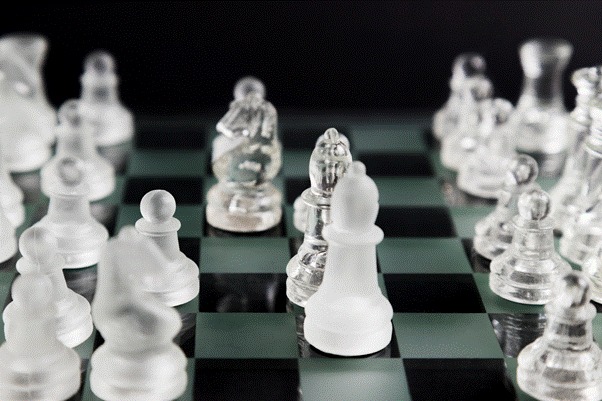
Sit down across from a decent chess player and you’ll feel it within minutes – that quiet pressure of knowing every move you make is being read, weighed, and answered before you’ve even finished thinking it through. Strategy games do something ordinary life rarely allows. They force you to plan around another mind that is actively trying to outwit yours. And buried inside that tension is a whole branch of mathematics that quietly governs business deals, elections, traffic jams, and the choices you make without noticing.
And this is precisely why card games have fascinated mathematicians for generations. Poker is game theory at its rawest, sweatiest form – a hand of poker is incomplete information, hidden intentions and a constant calculation of risk versus reward. The thrill you get at a place like slimking casino works on the same lines as what drives a grandmaster to make a gambit, rewarding the player who can read the patterns, manage his bankroll and not be tempted to chase a bad position. Whether the table is felt or digital, the underlying question never changes: given what I can see, and what I think you’ll do next, what’s the smartest move I can make right now?
What Game Theory Actually Means
At its core, game theory is the study of decisions made between people whose choices affect each other. That’s it. No dice required. The moment your best move depends on what someone else decides to do, you’ve stepped into its territory. Economists won Nobel Prizes mapping this out, but the ideas are surprisingly intuitive once you see them in motion. It also explains why so many standoffs feel impossible to escape, even when everyone involved would clearly prefer a different ending.
The Famous Dilemma
You’ve probably heard of the prisoner’s dilemma even if the name escapes you. Two suspects, separate rooms, and a deal on the table. Stay silent and you both get off lightly. Betray your partner and you might walk free – unless they betray you too, in which case you both lose badly. The maddening logic is that the “rational” move, betrayal, leaves everyone worse off than if they’d simply trusted each other. Strategy games are replete with these snags, and so is actual life.
Lessons That Travel Beyond the Board
The reason all this matters outside a games night is simple: the patterns repeat everywhere. Negotiating a salary, splitting chores with a flatmate, deciding whether to undercut a competitor on price – these are all games in the formal sense, complete with payoffs, bluffs, and second-guessing. Once you start spotting the structure, you can’t unsee it; a queue for the bus and a tense boardroom suddenly share the same skeleton.
Reading the Other Player
Good strategy players develop a kind of social radar. They stop asking only “what do I want?” and begin inquiring “what does that other individual anticipate from me, and how can I utilize that?” This transition – from your personal objectives to a framework of another’s thinking – is arguably the most valuable practice a strategy game can impart.
When Cooperation Beats Competition
Here’s the twist most beginners miss. The wisest move isn’t always the most assertive one. Repeated games – ones you play over and over with the same people – reward trust and reputation in ways a single round never could. Burn a partner once and they remember. The maths actually favours being reliable.
| Game Concept | What It Means | Where It Shows Up |
| Zero-sum | One wins only if another loses | Chess, tennis, bidding wars |
| Nash equilibrium | No one gains by changing alone | Pricing, traffic flow, standoffs |
| Bluffing | Acting against your real hand | Poker, negotiation, politics |
| Tit-for-tat | Mirror what others just did | Alliances, trade, friendships |
Where Smart Players Go Wrong
Even sharp thinkers stumble, and usually for human reasons rather than mathematical ones. They get attached to a plan and refuse to abandon it when the board changes. They assume their opponent thinks exactly the way they do. Or they let a single bad outcome rattle them into overcorrecting on the next decision. The fix isn’t more intelligence. It’s discipline – the willingness to treat each decision on its own terms and accept that good choices sometimes lead to bad results. Players who improve fastest are usually the ones who can lose a round, shrug, and ask what the position actually taught them.
Bringing It Into Everyday Decisions
You don’t need a chessboard to use any of this. The next occasion you’re faced with a difficult decision, try outlining it like a strategic player would. Who else has a stake in the outcome? What do they want? What will they probably do if you move first? Even a basic drawing on a small card surpasses rushing in unprepared. That single shift in perspective turns a fog of options into something you can actually navigate. Strategy games don’t just kill an afternoon. They quietly train the part of your mind that has to make real choices long after the pieces are packed away – and that, more than any trophy, is the prize worth keeping.
